Fashion Economies in Transition: Urban and Place-based Dynamics (RSA 2026 session)
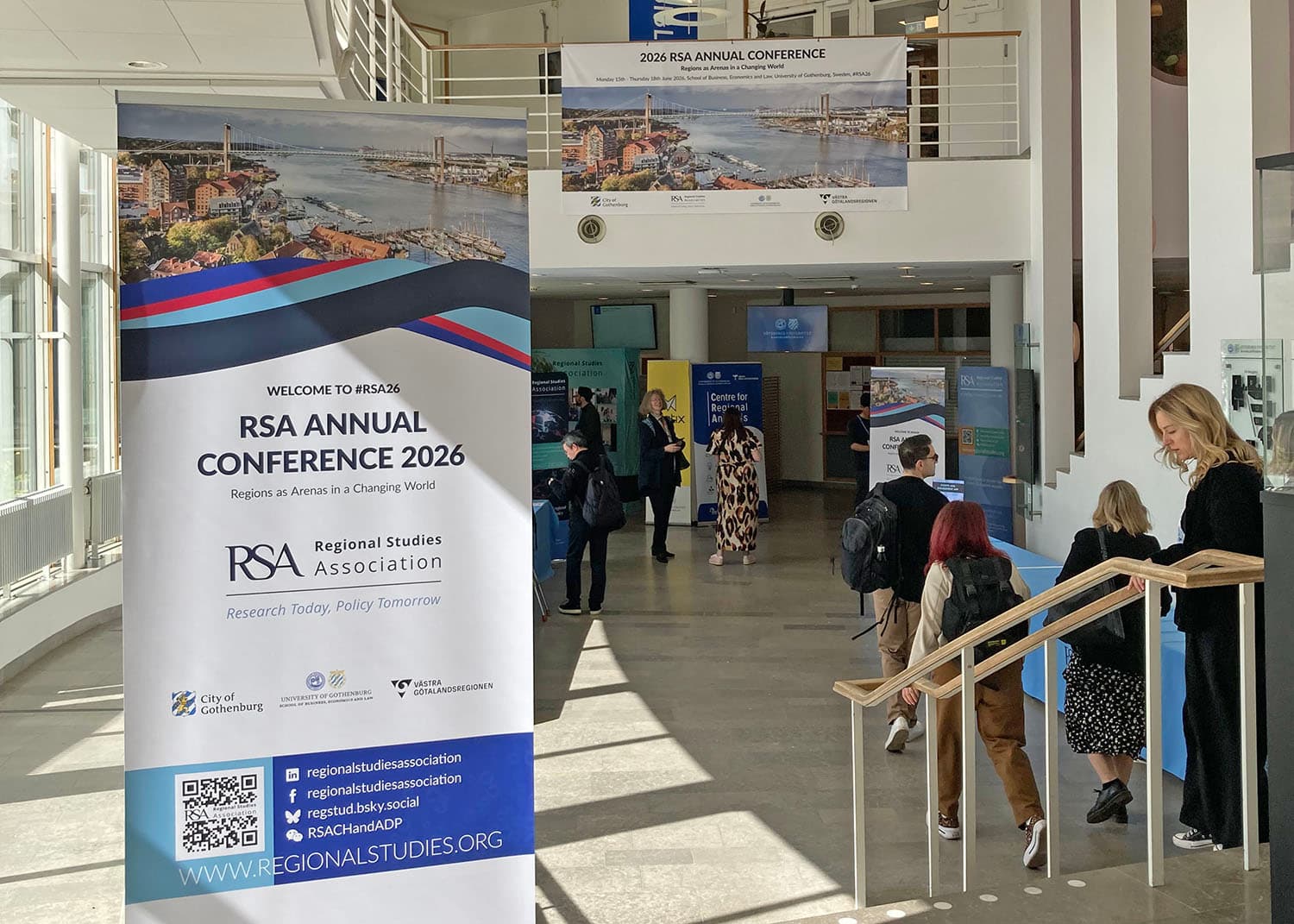
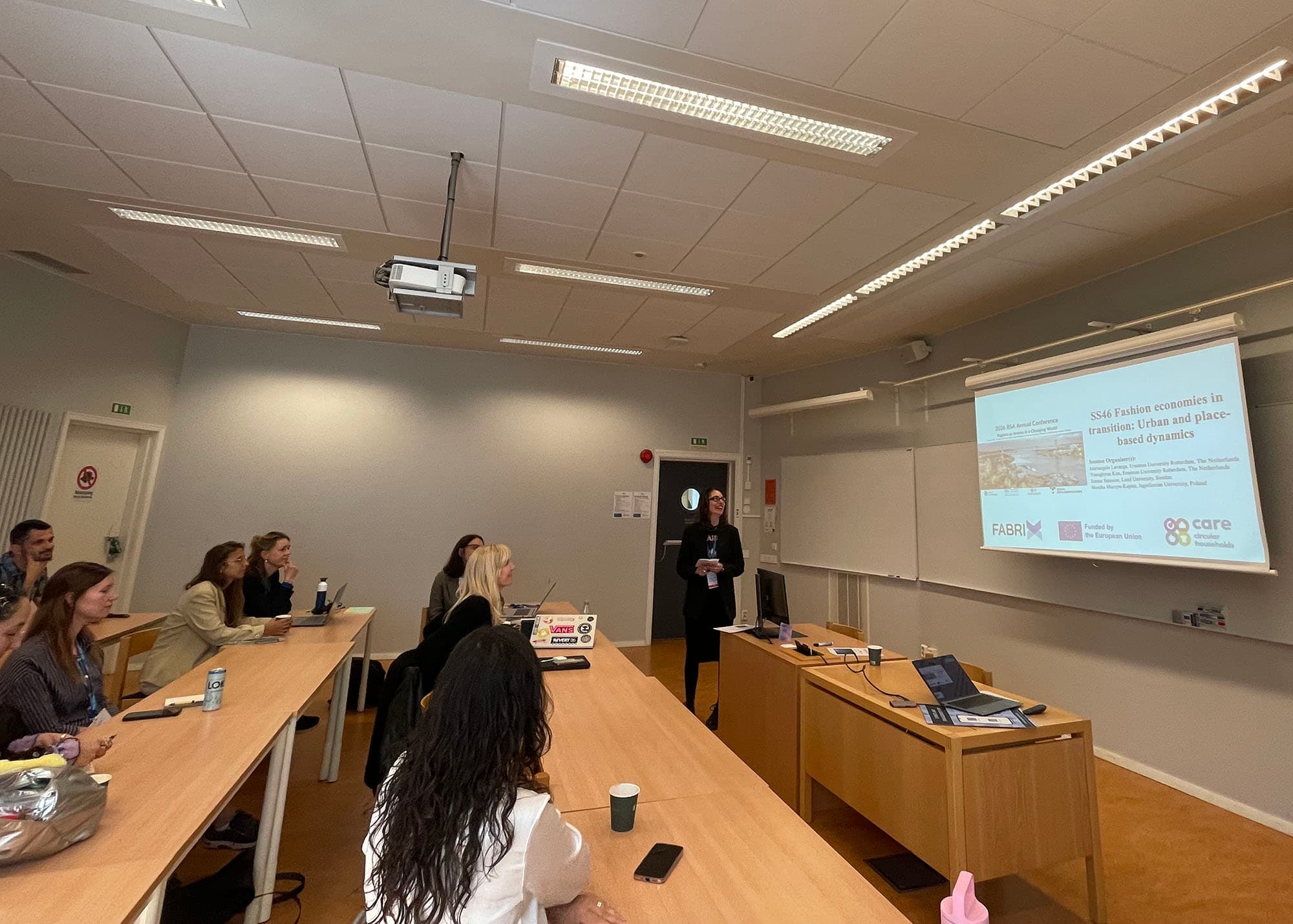
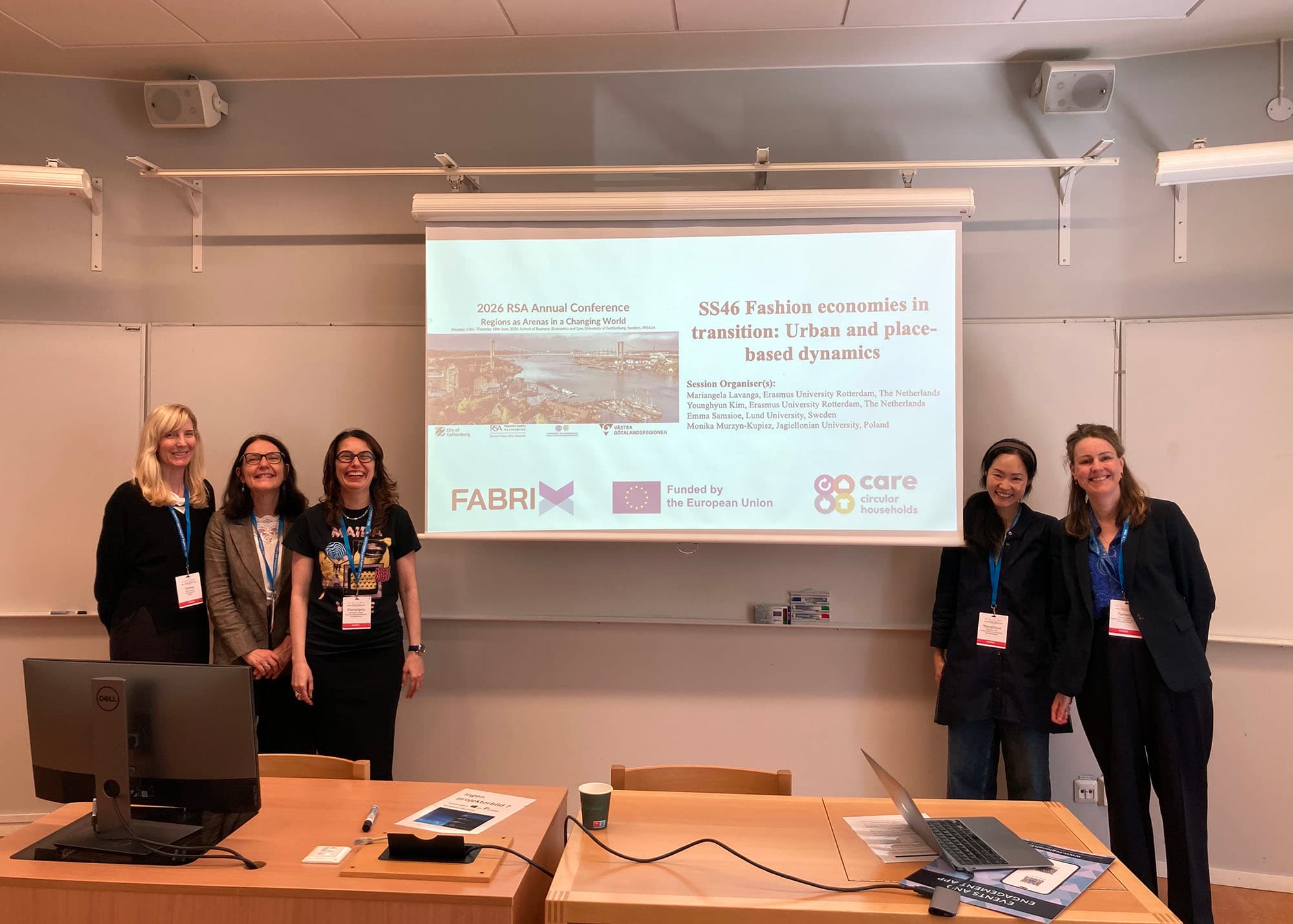
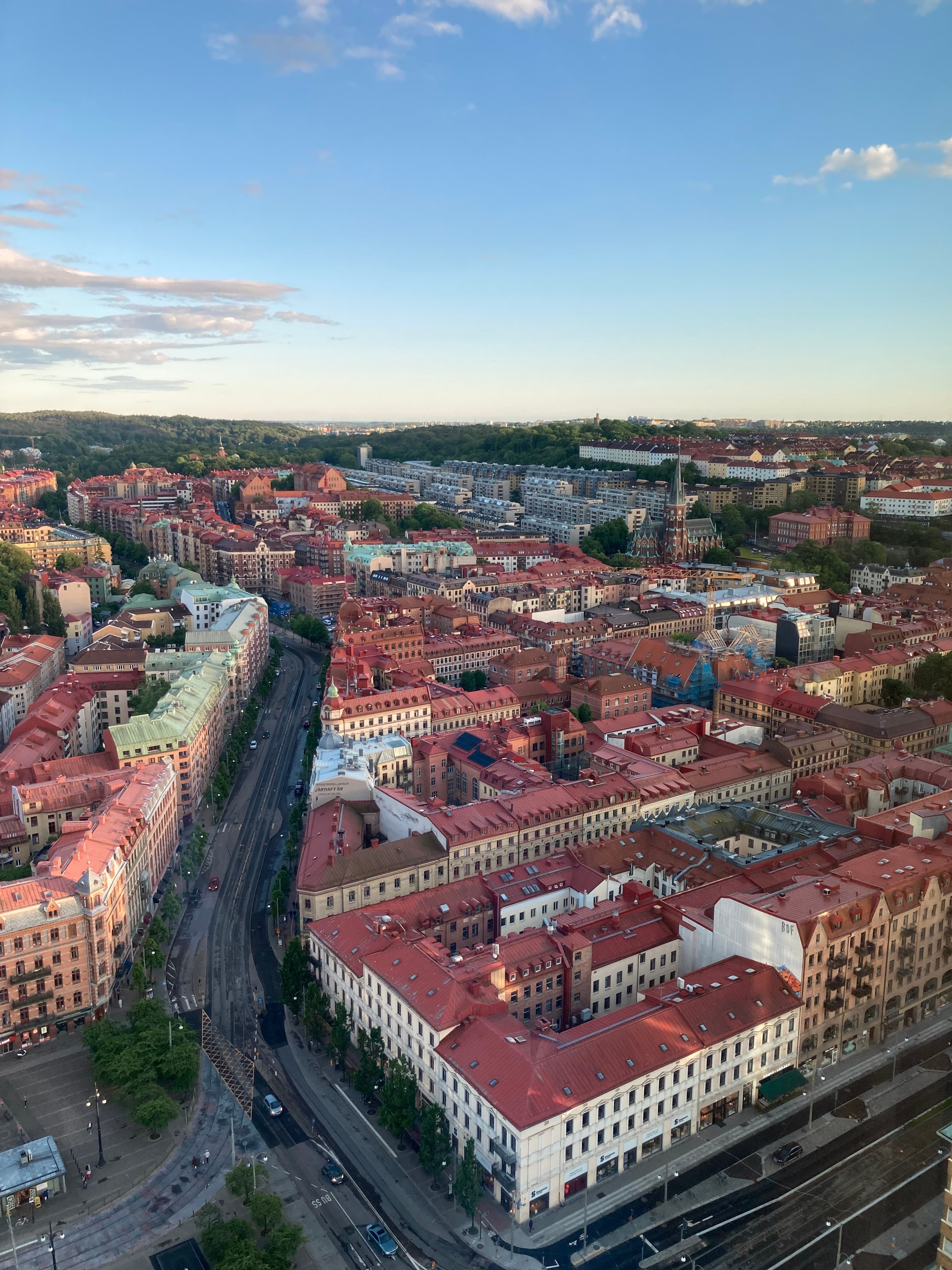
Fashion is often imagined and portrayed as a world of runways and glossy spectacles. But the industry is also deeply spatial, rooted in legacy textile cities, creative hubs, and the everyday work of makers and households well beyond the global fashion capitals. Organized by FABRIX together with the HORIZON Europe CARE project, our special session at the 2026 Regional Studies Association RSA Annual Conference in Gothenburg, Fashion Economies in Transition: Urban and Place-based Dynamics (SS46), asked the questions: as fashion undergoes digital and sustainability transitions, where does it actually take place, and who makes it happen? The session moved across scales, from bird’s-eye views of national maps to individual households.
Emma Samsioe (Lund University / CARE project) presented her work in the CARE project, connecting consumers’ circular behavior to the need for everyday accessible infrastructure and facilities for clothing reuse and repair. Mariangela Lavanga and Young Kim (Erasmus University Rotterdam / FABRIX project) mapped fashion specialisation across cities in the Netherlands from 1996 to 2024, showing changes in fashion sector activities, making the case for "re-territorializing" fashion. Monika Murzyn-Kupisz (Jagiellonian University) mapped the fashion sector’s often-invisible occupations in Poland, including tailors, seamstresses, patternmakers, shoemakers, revealing how craft and creative fashion work take place in metropolitan centres and heritage-rich peripheries. Tamara Schoon (Erasmus University Rotterdam / Inholland) examined the concept of a hub to show how relational work enables hubs to become relational infrastructures in support of sustainable fashion.
Across different methods and geographies, one theme united the session: sustainable and circular fashion transitions are place-based, shaped by local skills, material infrastructures, industrial legacies, and the invisible labour of makers, intermediaries, and consumers.
The conversation didn't stop there. The following day, Mina Rezikalla (TU delft / FABRIX project, Young Kim and Mariangela Lavanga (Erasmus University Rotterdam / FABRIX project) took part in a second special session, Governance, Political Commitment, and Everyday Circular Practices (SS22), extending the discussion on circular fashion into questions of governance and the spatial dynamics of everyday circular practices. Mina presented a chapter from her PhD dissertation that conducts a multi-scalar policy analysis at the intersection of circular economy, the textiles and clothing sectors, and urban planning. Young and Mariangela went a scale deeper, examining the spatial patterns of fashion's reuse and repair sectors at the neighbourhood level in Amsterdam and Rotterdam.
Taking part across multiple sessions was a reminder of how much these debates gain from crossing boundaries between disciplines, scales, and communities of researchers.
We're grateful to all presenters and everyone who joined us in Gothenburg. We look forward to continuing the conversation when the FABRIX project hosts its final conference in Rotterdam on 7 October 2026, where Emma Samsioe (Lund University / CARE project) has also been invited to share considerations from the CARE project.